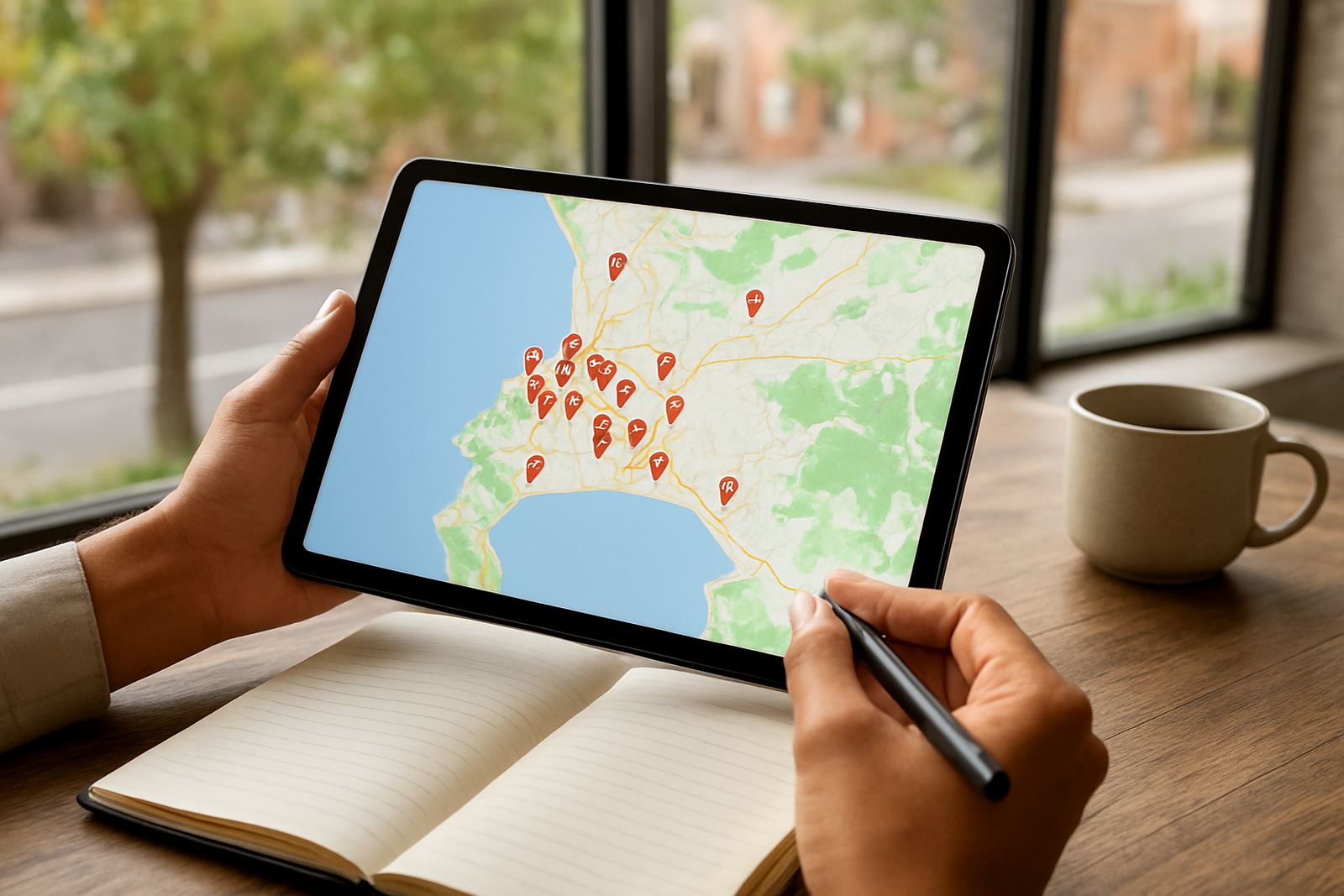
Start with the area your customers actually search for
Location domains work best when they match how people in your area think and search. In Cape Town, that might mean a suburb name for a tight local service area, a city name for broader coverage, or a regional phrase when you work across several towns. A plumber in Claremont may want a different approach from a logistics firm serving Bellville, Somerset West and Paarl.
Before you choose, write down where most of your leads come from. If you mostly take calls from people within 5 km of your base, a suburb domain can support that local message. If your work stretches across the metro or into nearby towns, a city or regional domain may be the better fit. It is not only about being found, it is about being easy to remember when a customer needs you later.
- List your top service areas by suburb, city and region.
- Check whether customers use short local names or wider area names.
- Think about emergency work, repeat orders and referral traffic.
- Decide if the domain must suit one branch or the full business.
When a suburb domain makes sense
A suburb domain can work well for trades, medical practices, home services and local specialists who want to speak directly to one neighbourhood. If you serve a focused pocket of demand, such as Claremont, Rondebosch or Bellville, a suburb name can make your local message clear. It can also help when you want a separate page or campaign for one area, without mixing it with your broader coverage.
For small operators, suburb domains are often easier for radio ads, van signage and word of mouth because they sound specific and close to the customer. They are useful for businesses that rely on repeat calls from nearby residents, body corporates or local offices. Just make sure the name still makes sense if you expand later, otherwise you may outgrow it quicker than expected.
- Use a suburb domain if most jobs are within one or two neighbourhoods.
- Choose it for area-specific landing pages or branch targeting.
- Avoid it if you plan to cover the full metro within 6 to 12 months.
- Check that the name is simple to spell over the phone.
Why city domains suit broader local service marketing
City domains are a practical middle ground for businesses that want local relevance without sounding too narrow. A city name such as Cape Town can cover multiple suburbs, nearby commercial zones and a larger pool of search demand. This works well for companies that operate from Claremont but regularly service Bellville, Stellenbosch, Paarl and Somerset West.
If your team works across different neighbourhoods, a city domain can keep your marketing cleaner. It is also easier to use on business cards, quotes and invoices because the area name is widely understood. In many cases, the city name is the safer choice when you need room to grow and still want a local identity.
City domains are also helpful when load-shedding affects your operations and you need customers to know you are still active across a wide area. They can support a central booking line, emergency call-outs and area-based SEO pages without making each suburb feel like a separate business.
Regional domains for multi-town coverage
Regional domains suit businesses that serve more than one town and want one simple message for all of them. If your work spans the Western Cape or a defined corridor of towns, a regional domain can be useful for campaigns, service directories and broader brand recall. It is often the best option when your transport costs, travel time and call-out structure change depending on distance.
These domains are handy for businesses that deal with coastal humidity, seasonal demand or compliance differences between municipalities. For example, a specialist contractor might need to show coverage from the Cape Town side through to Somerset West and into the winelands, while still keeping the same trading name. A regional term gives you room to explain the footprint without listing every town in the domain itself.
- Pick a regional domain when you cover several towns and suburbs.
- Use it if you need one site for multiple branches or teams.
- Check if your quoting model changes by zone, fuel or toll route.
- Make sure the regional term is familiar to your market and not too vague.
A simple comparison checklist before you register
When comparing location domains, look at the practical details first. The right choice should fit your call volume, route planning, brand wording and future expansion. It should also be easy to say, easy to type and easy to remember when someone is trying to find you after hours.
Use this checklist before you commit:
- Does the domain match your main service area today?
- Will it still make sense if you add a second branch?
- Is the spelling obvious in SA English and local speech?
- Can you use it on signage, quotations and invoices without confusion?
- Does it fit your Google Business Profile and local listing strategy?
- Will it suit WhatsApp messages, email addresses and radio mentions?
If two options feel close, choose the one that gives you more room to grow. A name that is too small can force a costly change later, while one that is too broad can weaken your local message. The goal is to balance clarity and flexibility, not chase every possible keyword.
How DropCatcher helps you compare and secure the right option
Some of the best location domains are already registered or may only become available when they expire. That is where monitoring, backorder placement and release window tracking matter. You need to know when a domain is due to drop, whether there are competing claims and how quickly it can be secured if it becomes available.
DropCatcher supports South African registrants from Claremont, Cape Town with remote monitoring across the country. The team reviews expiry data, tracks release windows and helps clients compare suburb, city and regional options before placing a backorder. If you are building a local service brand, the practical value is in timing, not guesswork.
For businesses with multiple areas in mind, a portfolio audit can also show where your current names are too narrow or too broad. That is useful if you are trading across Cape Town Coverage, Bellville Coverage, Stellenbosch Coverage, Paarl Coverage and Somerset West Coverage. The right domain should work with your routing, your phone line and your local marketing, not against it.
Email domains@dropcatcher.co.za if you need help weighing up options or watching a specific local name.