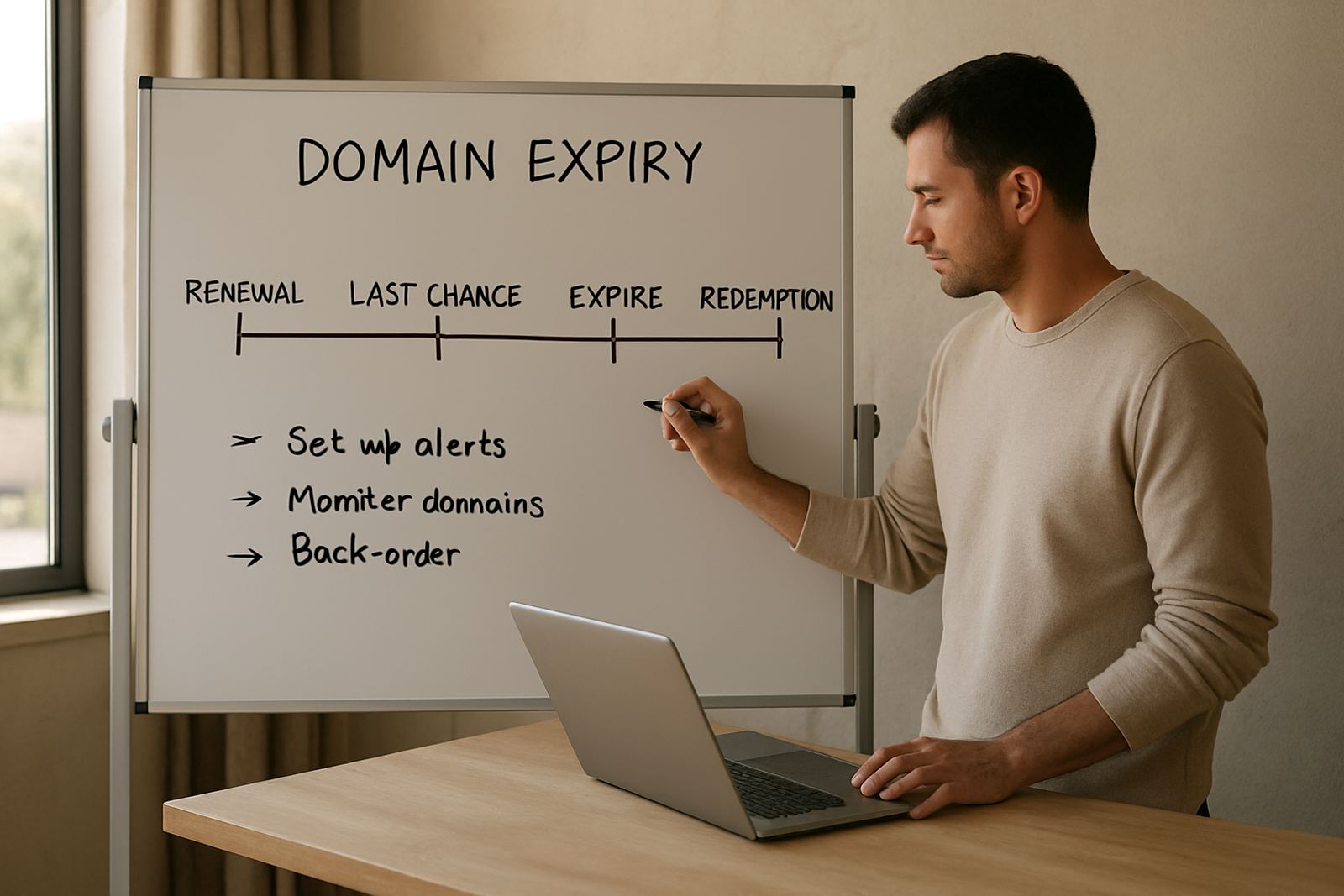
The first missed renewal is not the end
Most domains start with a simple problem: the renewal date passes and the registrar has not received payment. In many cases the website and email keep working for a short while, which can fool teams into thinking there is no urgency. But the clock has already started. If a domain slips, there is still a window to act but the timing changes fast.
For a business in Claremont, Bellville or Stellenbosch, this can mean a trading name, email address and Google listing are all tied to one expiring domain. Miss that renewal and you can lose more than a web address. You can lose enquiries, invoices and trust.
What usually happens after the renewal date
After expiry, the domain normally enters a sequence of status periods. The exact timing depends on the extension and the registry rules, but the pattern is often similar. First comes the grace period, then a suspended or inactive stage, and after that the name may move into a redemption stage before release.
This is where many owners get caught out. They assume a late payment is enough, but the cost can rise once the domain is past the first renewal window. In some cases recovery may still be possible, but it may involve extra admin and higher fees. That is why renewal reminders should be treated like water bills, tax dates or municipal notices, not something to sort out later.
- Grace period: the owner may still renew at the standard rate
- Suspension stage: the website and email can stop working
- Redemption stage: recovery may still be possible, but usually costs more
- Pending release: the domain is close to becoming available again
Why some expired domains are snapped up quickly
Not every expired name is valuable, but the good ones move fast. Clean short names, local terms, product names and strong brand phrases often attract attention as soon as they are released. A contractor in Somerset West, for example, may ignore an old site name for a few weeks and then discover that someone else has taken it for a competing business or a resale purpose.
That is why back-order and monitoring services focus on the release window rather than just the expiry date. The key question is not only when a domain expires, but when it becomes available to register again. Those are two different moments.
- Short, memorable names are often watched closely
- Names with local or industry meaning can attract interest quickly
- Once a release window starts, timing matters more than price
The warning signs that a domain is at risk
Expired domains usually do not come out of nowhere. There are signs long before the final release stage. Billing contacts change, inboxes go quiet, and the person who originally handled renewals may have left the company. In smaller businesses, the domain often sits with one person and nobody else knows the login details or payment method.
A proper portfolio audit helps spot these risks early. It checks which names are coming up for renewal, which are linked to old staff emails and which domains support active services. If the business runs separate names for campaigns, regional branches or specialist offerings, those should be included too.
- Old contact details on the registrar account
- Renewal notices going to a general mailbox that is not monitored
- Card expiry, failed debit orders or unused payment methods
- Multiple domains with no clear owner inside the business
What to do when a domain has already expired
If a domain has already expired, do not wait and hope it will sort itself out. Check the current status, confirm the renewal deadline and decide whether the name is worth recovering. For a business that relies on email, the priority is usually to restore control before messages start bouncing and clients move on.
In Cape Town, where many firms operate with remote teams and suppliers across the province, a broken domain can affect orders, invoices and customer replies very quickly. The best step is to act early, track the release window and keep record of each status change. That way no one is left guessing whether the name is still recoverable or already in the public queue.
Useful actions include:
- Confirm the expiry date and renewal status straight away
- Check whether the domain is still in grace or redemption
- Prepare a backup email and contact plan in case the main address fails
- Set renewal reminders for all active domains, not only the main one
How to avoid losing a name in the first place
The safest approach is to watch domains before they reach expiry. Renewal reminders, expiry monitoring and release tracking reduce the chance of a last minute scramble. That matters for startups as much as established firms, because the cost of replacing a lost name can be far higher than renewing it on time.
For South African businesses, a good system should also account for staff leave, public holidays, load-shedding disruptions and accounts that fall through the cracks during a busy quarter. When renewals are spread across several months, the risk is not one dramatic failure. It is a series of small oversights that add up.
A solid domain management routine should cover:
- Renewal reminders for all active domains
- Back-order placement on names you want to secure if they release
- Brand variant watch for common spelling changes and hyphenated versions
- Reporting so the right person knows what is expiring next
If you know the stages a domain passes through, you can make quicker decisions and avoid losing a good name to delay. That is usually the difference between a simple renewal and a costly recovery.